Amsterdam has world-class museums, and none of them beat a good brown cafe for history you can actually sit in.
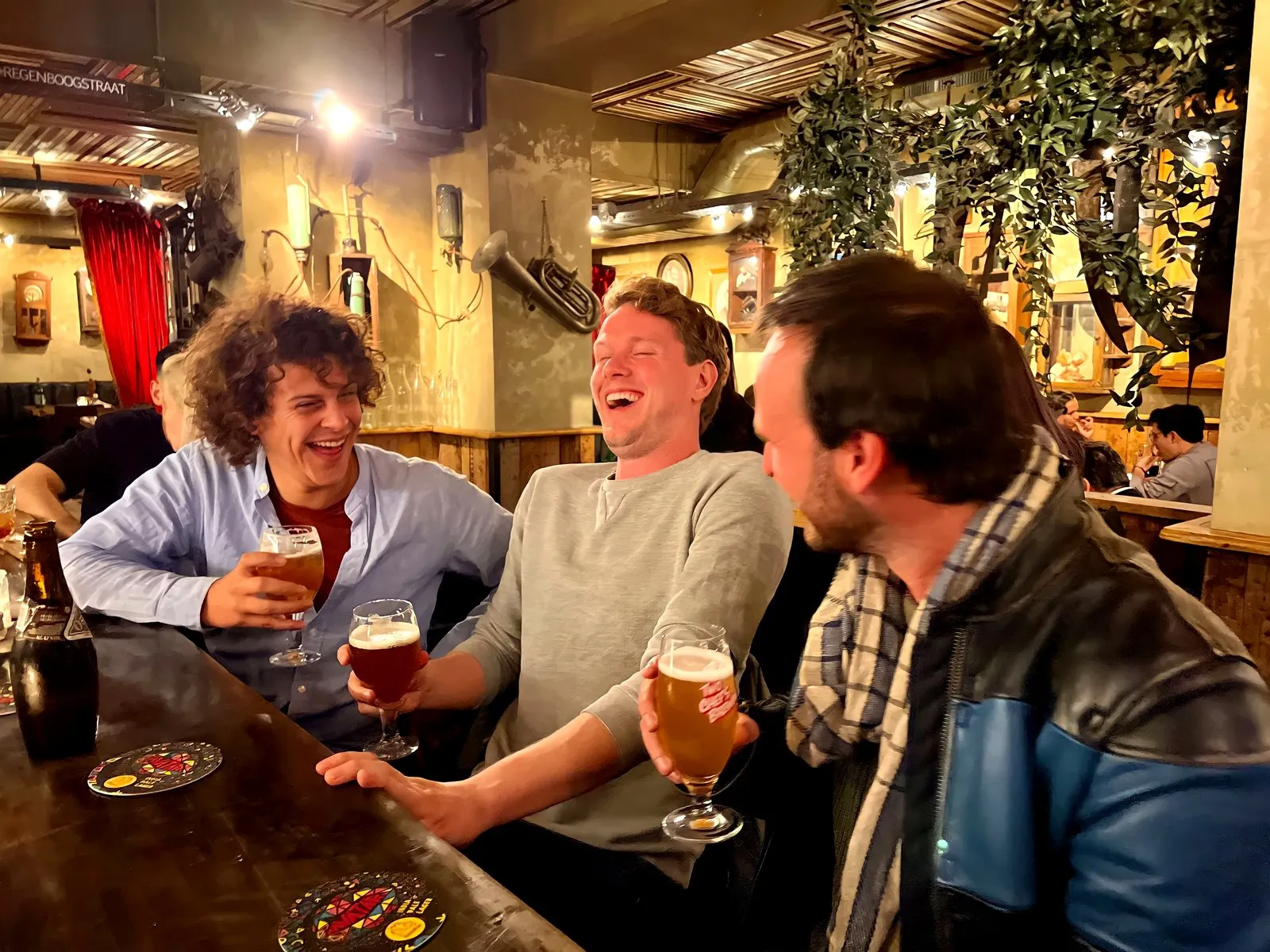
A bruine kroeg, brown cafe, is the living room of this city. Dark wood, low light, candles on the tables, beer taps polished by a century of hands, and a ceiling stained the color of strong tea by generations of smoke. No playlist fighting your conversation. No concept. Just a bar that has outlived empires and will outlive us all.
Our 10 Tastes of Amsterdam food tour ends in one, on purpose. After three hours of eating through the city, there is no better final stop than a candlelit bar where the past pours the drinks. Guests regularly tell us the brown cafe was the moment Amsterdam clicked for them.
Here’s what a brown cafe actually is, how not to embarrass yourself in one, and where to find the best of them in the Jordaan, the neighbourhood that does them better than anywhere on earth.
What Is a Brown Cafe, Exactly?
The short version: a traditional Dutch pub, usually old, always brown.
The brown is not a design choice. It’s sediment. Centuries of tobacco smoke, candle soot and spilled genever soaked into wooden walls and plaster ceilings until the whole room turned the color of caramel. When smoking indoors was banned in 2008, the walls stopped darkening, so the patina you see today is finished history, like tree rings with a liquor license.
The anatomy of a proper one:
- Wood everywhere: floors, walls, bar, and furniture that wobbles with dignity.
- A Persian rug on the table. Genuinely a thing, an old Dutch trick to soak up spills and warm the room.
- Candles burning in daylight, because the windows are small and the mood matters.
- A cat, ideally. Employed by nobody, in charge of everything.
- Regulars who nod at you exactly once.
What a brown cafe is not: a sports bar with old photos, a cocktail spot with Edison bulbs, or anything that calls itself “vintage-inspired”. The Jordaan’s real ones never had to fake it.
A Short History of the Bruine Kroeg
Brown cafes go back to Amsterdam’s Golden Age, when the city was the busiest port in the world and every street needed somewhere for sailors, traders and builders to drink, argue and do business. Many started as combined liquor distilleries and tasting rooms, jenever was Amsterdam’s export as much as its vice, and the proeflokaal (tasting room) tradition still shapes how the city drinks.
The Jordaan collected more of them than anywhere else because it was the working-class quarter: carpenters, bargemen and market traders needed their locals, and the locals never left. When the neighbourhood gentrified, the brown cafes stayed put, which is why you can now drink a €3.50 beer in a room where the story goes that the builders of the Westerkerk collected their wages four hundred years ago.
Brown Cafe Etiquette: The Unwritten Rules
Nobody hands you a rulebook, so here’s the one that doesn’t exist:
- Slow down. A brown cafe visit is measured in hours, not drinks. Nobody hovers for your table. Ordering one coffee and staying all afternoon is not just allowed, it’s the point.
- Order at the bar if the place is busy and the bartender is solo. Watch the regulars and copy them.
- Keep your voice down-ish. Conversation is the entertainment. The classic brown cafes play no music or keep it under the level of talk. That silence you hear is a feature.
- Round up, don’t tip big. Dutch tipping is relaxed everywhere, and brown cafes are the most relaxed of all. Our tipping in Amsterdam guide has the full picture, but “make it ten” covers most rounds.
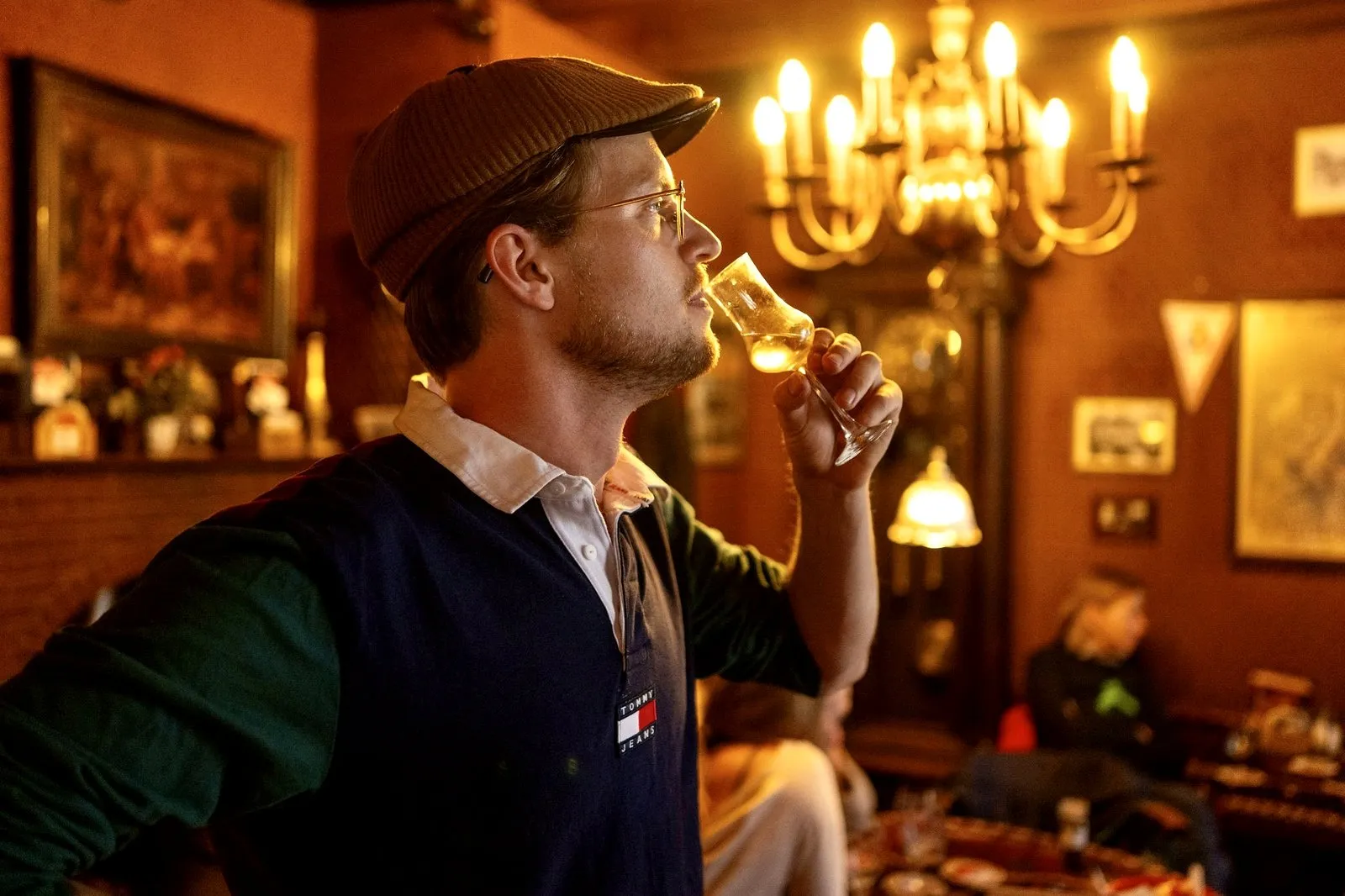
- Try the jenever ritual. Order a kopstootje (“little headbutt”): a shot of jenever filled to the trembling brim, served next to a small beer. The first sip is taken hands-free, bending over the bar to slurp the top off. Yes, everyone looks silly doing it. That’s half the ceremony.
What to Order
Beer: ask for a vaasje, the standard small Dutch draft. It looks tiny to visitors and stays cold to the last sip, which is the entire argument. The foam head is supposed to be there; the bartender skims it flat with a wet knife and it keeps the beer fresh.
Jenever: the grandfather of gin, distilled here for centuries. Jonge (young) is smoother, oude (old) is rounder and maltier. Order it ice cold, straight, in the tulip glass.
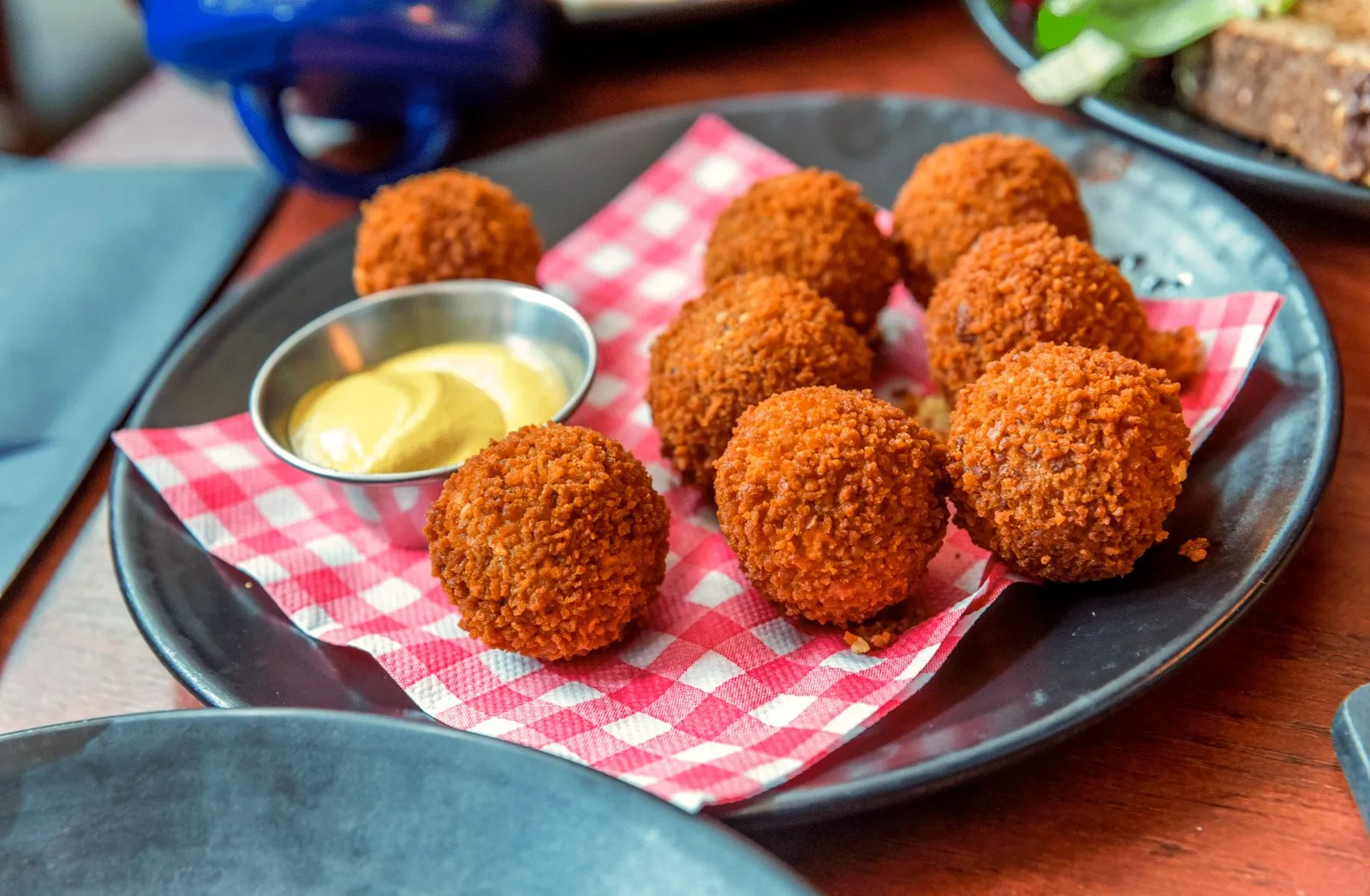
Bitterballen: the non-negotiable. Crisp outside, molten beef ragout inside, mustard for dipping. Invented for exactly this room and exactly this beer.
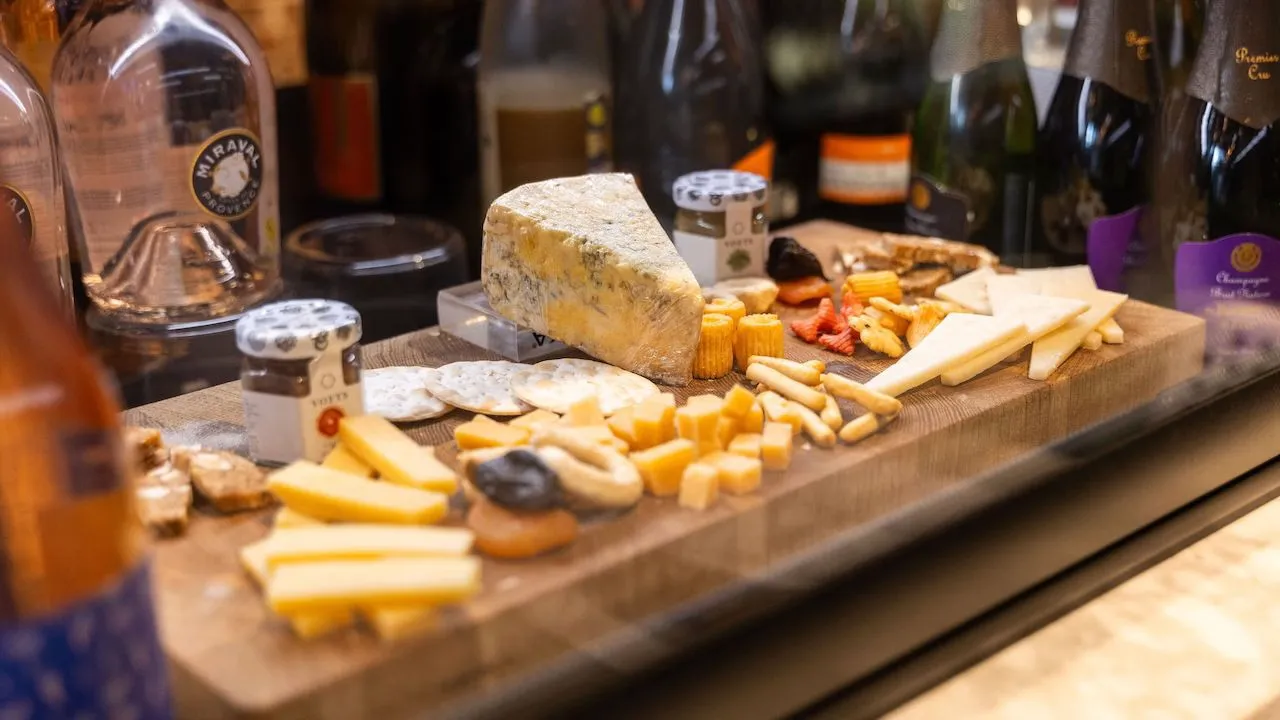
Cheese with mustard: cubes of aged gouda, a smear of mustard, a toothpick. Sounds like nothing, tastes like the Netherlands.
The Jordaan’s Best Brown Cafes
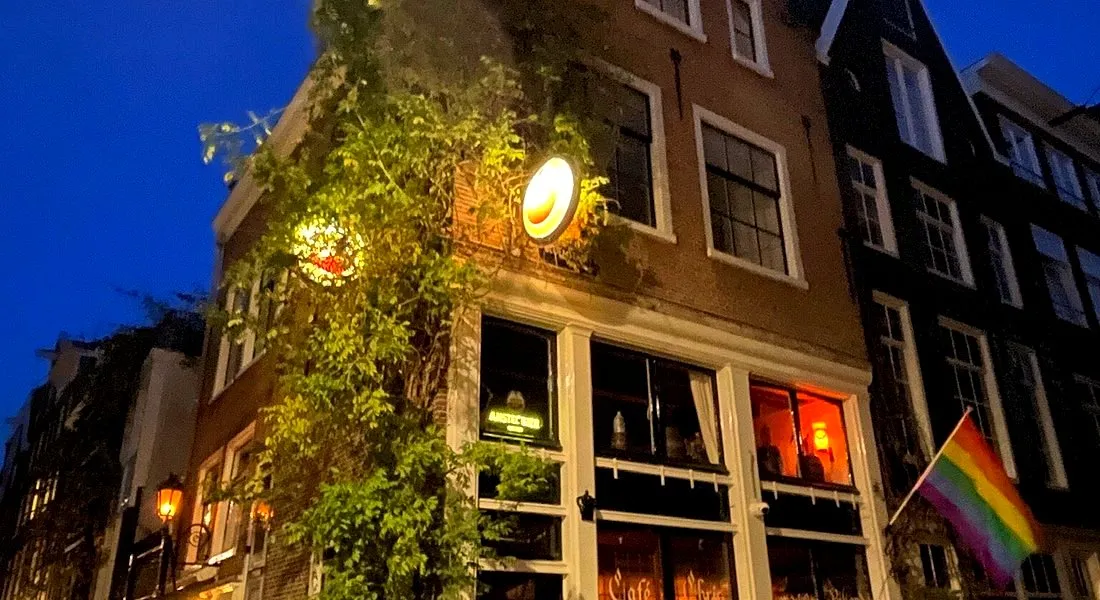
The Jordaan is brown cafe country, and these are the rooms worth crossing the city for.
Cafe Chris (since 1624)
The Jordaan’s oldest, pouring since 1624 in the shadow of the Westerkerk. The story goes that the church’s builders drank and collected their wages here, and four centuries later the room still feels like their shift just ended. Tiny, dark, perfect. The billiard table upstairs is older than most countries.
‘t Smalle
Opened in 1786 as the distillery and tasting room of Pieter Hoppe’s jenever business, and it still looks the part: stained glass, brass, and a canal-side terrace on the Egelantiersgracht that might be the single best place in Amsterdam to watch the evening arrive. Come early for the terrace, or come in winter when the candlelit inside is at full power.
Cafe Papeneiland (since 1642)
On the postcard corner of Prinsengracht and Brouwersgracht, all Delft-blue tiles and creaking stairs, serving since 1642. The name (“Papists’ island”) nods to the hidden Catholic church across the water, and legend insists on a secret tunnel under the canal. What’s not legend: the apple pie, which is so good even Bill Clinton dropped in for a slice, and the pie outlasted the presidency.
Cafe ‘t Hegeraad
Right on the Noordermarkt, facing the Saturday farmers market, and about as unchanged as a room can be: velvet, brass, wood, and coffee that comes with real whipped cream. We bring tour guests here when it fits the route; the welcome is the same whether you’ve been coming for forty years or four minutes.
De Twee Zwaantjes
The singing one. On weekend nights this small Prinsengracht bar fills with accordion music and levenslied, the Dutch tearjerker singalong tradition, performed by people who mean every word. Go once and you’ll either flee in three minutes or stay until closing. There is no middle outcome.
Cafe de Reiger
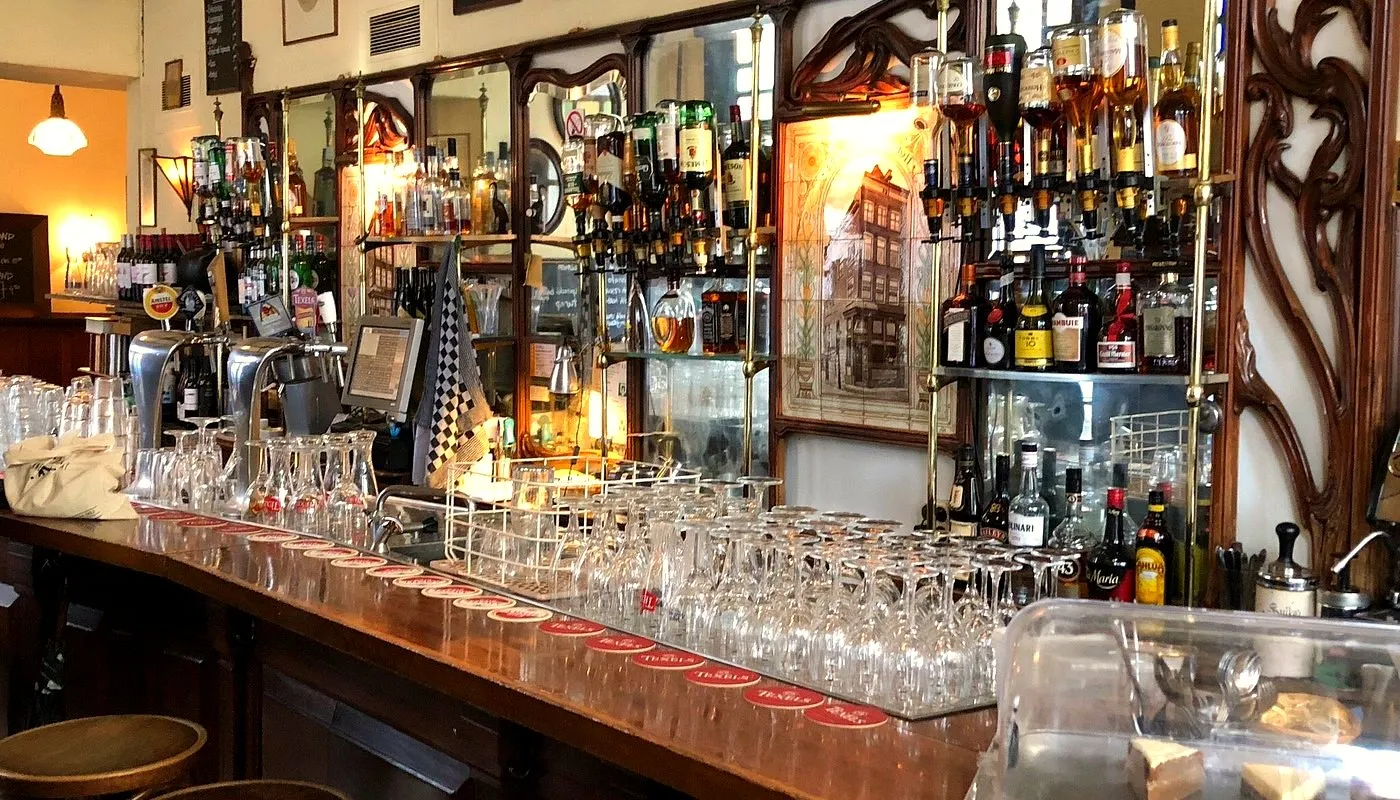
The eetcafe of the list: a proper brown cafe up front, honest Dutch-French cooking in the back, art nouveau woodwork throughout. When someone asks where to actually eat dinner in the Jordaan without a tourist menu in sight, this is a standing answer.
Beyond the Jordaan: Two More Worth Knowing
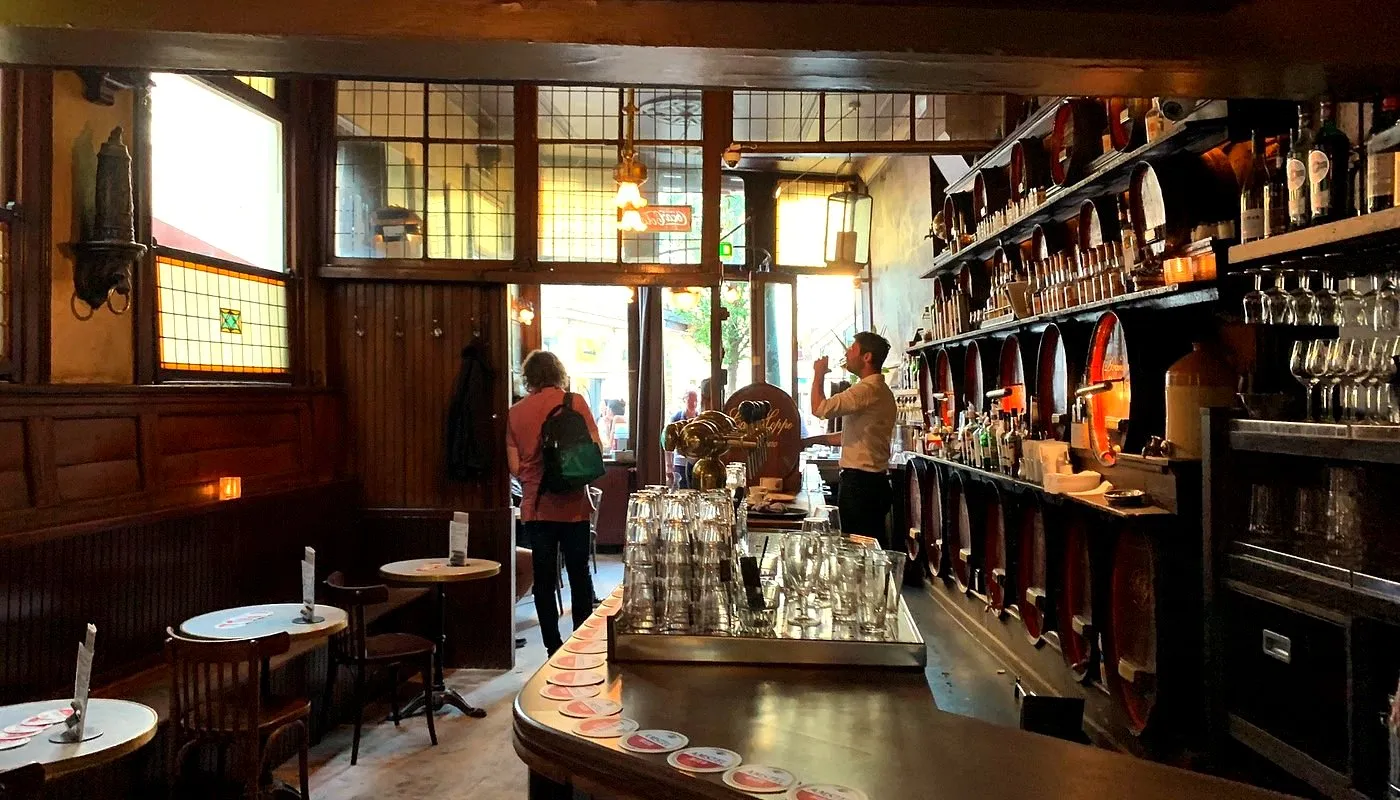
Cafe Hoppe (Spui, since 1670): barrels on the wall, sand on the floor, three and a half centuries of philosophers, journalists and students arguing over the same bar. On a summer evening the crowd spills across the Spui like the 17th century never ended.
In ‘t Aepjen (Zeedijk): built into one of Amsterdam’s last wooden houses, from the 1500s. The name means “in the monkeys”: the story goes that sailors short on cash paid their tab in monkeys brought back from Indonesia, and a room full of monkeys is how you get the Dutch saying “in de aap gelogeerd”, to be in trouble. Drink where idioms were born. It sits at the edge of the Red Light District, which pairs neatly with our beer tour through that neighbourhood.
Taste It With Us
You can visit every bar on this list solo, and you should. But the stories, why the glasses are shaped that way, what jenever did to this city, which regular owns which stool, are what turn a nice old bar into the best hour of your trip.
Our small-group food tour walks the centre and ends over drinks the traditional way, never more than 12 guests, which happens to be exactly the number that fits comfortably in a brown cafe. Which is not a coincidence. Proost.