
Why street food is the real Amsterdam
Amsterdam is famous for canals and museums, but ask a local for the best street food in Amsterdam and they’ll point at a fish stall. Street food here isn’t a trend, it’s how this trading city has eaten for centuries: fast, honest, and standing up.
Dutch street food was built for people on the move. Fries in a paper cone, herring you tip back by the tail, a warm stroopwafel pressed while you wait. Watch an Amsterdammer eat lunch one-handed while unlocking a bike and you’re watching history with mayonnaise on it.
We built our 10 Tastes of Amsterdam food tour around exactly this: the stalls, shops and bars locals actually use, with the stories behind each bite.
The classics: what to eat first
Herring, the Dutch sashimi
Cured North Sea herring, lightly brined, served with chopped onions and pickles. It sounds like a dare and eats like silk. Guests tell us over and over they’d never have ordered it alone and it ends up their favourite story of the trip. Get it “broodje haring” style (in a soft roll) if you want training wheels. We wrote a full guide to the famous herring sandwich with the best stands in town.
Bitterballen, the king of Dutch bar snacks
If the Netherlands has a national snack, it’s the bitterbal: a golf-ball-size croquette, shatteringly crisp outside, molten beef ragout inside, always with mustard. The name comes from “bittertje”, an old word for a shot of jenever, because that’s what they were invented to accompany.
Rules of engagement: let them cool for a minute (everyone burns their mouth exactly once), dip in mustard, repeat. You’ll find the best ones in brown cafes rather than on the street itself, which is the perfect excuse to sit down with a beer. On our tours the plate of bitterballen is regularly voted the favourite tasting of the afternoon, beating far fancier food.
Stroopwafels, hot off the iron
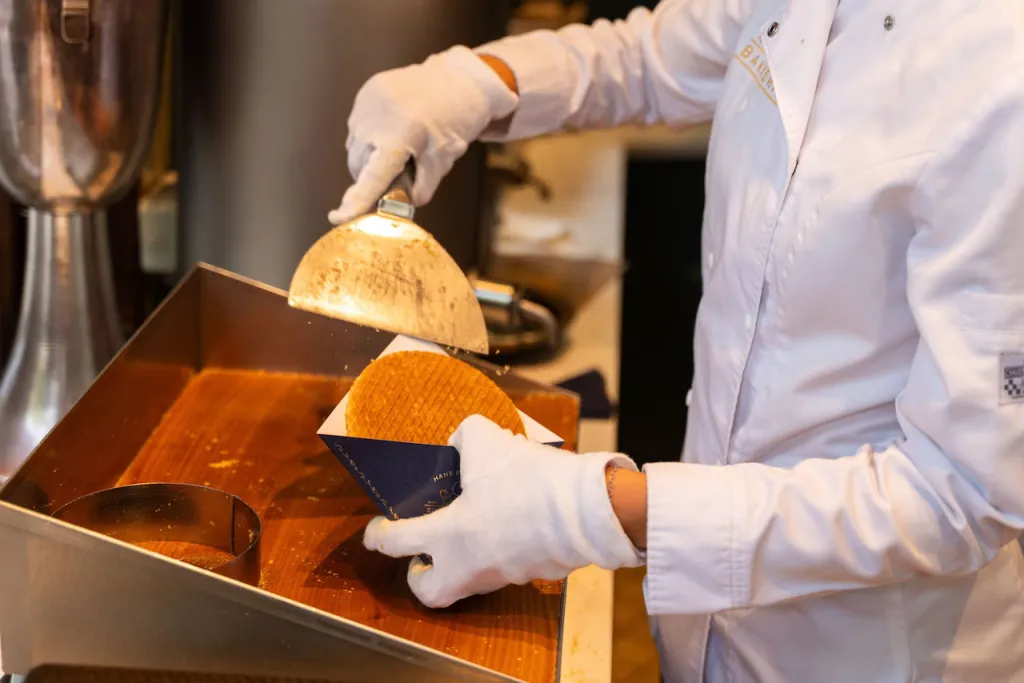
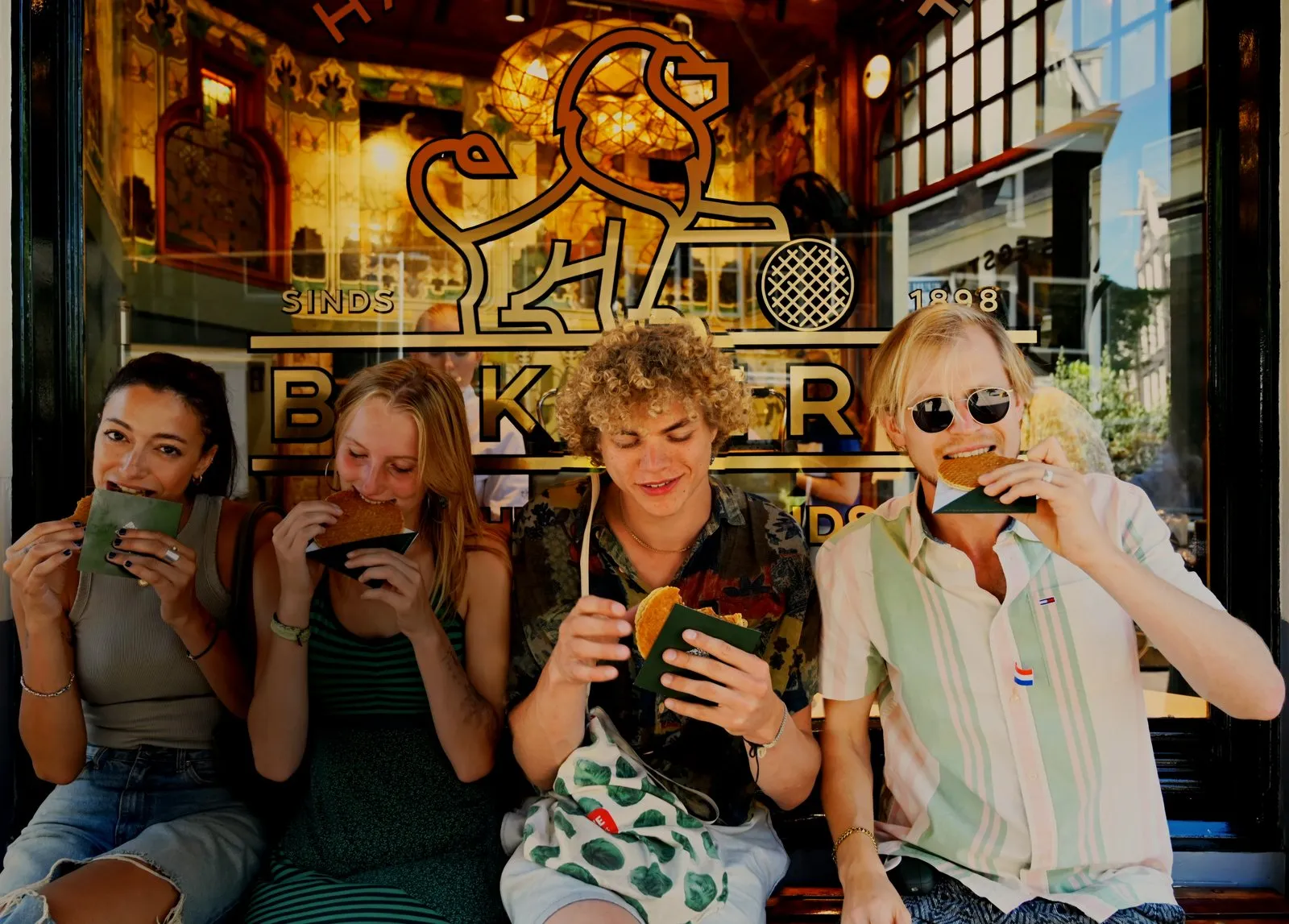
A stroopwafel from a supermarket packet is fine. A stroopwafel pressed fresh at a market stall, caramel still warm and stretching as you pull it apart, is a different food entirely. Only ever buy them where you can see the waffle iron.
Kibbeling
Chunks of cod in crisp batter with garlicky remoulade, the Dutch answer to fish and chips, sold at the same stalls that do herring. Great first stop if uncooked fish needs a warm-up act.
Fries done the Dutch way
Thick-cut, double-fried, served in a paper cone under a landslide of sauce. The local order is “patat met” (fries with mayo), but the connoisseur move is “oorlog” (war): mayo, peanut satay sauce and raw onions together. Chaotic. Correct.
Poffertjes
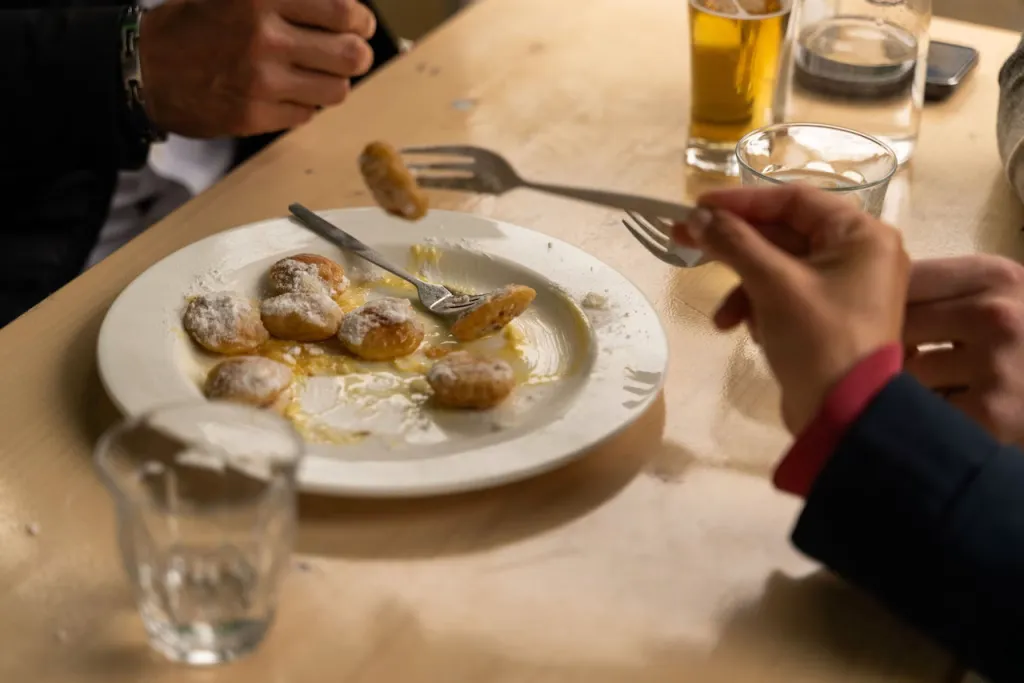
Mini pancakes puffed up on a dimpled cast-iron griddle, drowned in butter and powdered sugar. Kids’ food that no adult has ever successfully resisted.
Dutch snacks beyond the famous five
Going one layer deeper into Dutch snacks pays off:
- Frikandel - a skinless deep-fried sausage, the guilty pleasure of every Dutch night out. Order it “speciaal” with mayo, curry ketchup and onions.
- Kroket - the bitterbal’s log-shaped big brother, often served on a soft bun (broodje kroket), or pulled hot from a wall vending machine at FEBO. Yes, hot food from a wall, since the 1950s and still glorious at 2 a.m. Go for the kroket or the kaassouffle behind the little glass doors and skip the burger.
- Ossenworst - raw spiced beef sausage, an Amsterdam original from the city’s old Jewish kitchen.
- Loempia - the Dutch-Indonesian spring roll, crackly and enormous at market stalls.
- Stamppot in winter - not street food strictly, but the market stalls selling smoked sausage over mashed kale in January are doing holy work.
Meat, spice and global street food
Amsterdam’s street food goes way past the Dutch classics, and this is where the city’s trading and colonial history shows up on a plate.
- Satay skewers - marinated chicken grilled on sticks, slathered in spicy peanut sauce. Indonesian influence at its best, sold at food trucks and Indonesian takeaways all over town.
- Döner and Turkish wraps - lamb or chicken, fresh veg and garlic sauce, a proper meal for under 7 euros. Easy to find around Dappermarkt and De Pijp.
- Broodje bakkeljauw - a Surinamese sandwich of salted cod and pickled veg with real heat, straight from Amsterdam’s Caribbean kitchen.
- Rookworst - juicy smoked sausage with mustard on a bun, a winter comfort snack that hits hardest in the cold months.
Eating plant-based on the street is no problem either. Vegan bitterballen and croquettes made with mushroom or lentil ragout now show up at plenty of stalls, Maoz does cheap and filling falafel wraps across the city, and vegan stroopwafels and apple tarts turn up at the newer market stands.
Amsterdam street food markets: where the locals eat
Albert Cuyp Market, the mothership
Albert Cuyp Market in De Pijp is the biggest open-air market in the city, running since 1905: herring, warm stroopwafels made to order, hot poffertjes off the griddle, kibbeling, fries with satay sauce and Surinamese sandwiches shoulder to shoulder for a kilometre. Most items land between 3 and 7 euros. Our Albert Cuyp Market guide has the stall-by-stall detail.
Foodhallen, street food indoors
Foodhallen in Oud-West is street food that moved indoors: a former tram depot with global stalls under one roof, where you graze one bite at a time. Bitterballen at one counter, gyoza at the next, a plate of Iberico ham further along, craft beer throughout. Try a truffle bal or a sampler at BallenBar, though that stand gets busy and sometimes closes early, so it isn’t always staffed when you arrive. It gets packed at peak times too. Go mid-afternoon or early evening and you’ll actually get a table. Less Dutch, more global, and very good on a rainy day, which in Amsterdam is a genuine consideration.
Dappermarkt, multicultural flavours
Dappermarkt on the east side is the one for global street food: Turkish, Surinamese, Moroccan and African stalls, doner wraps, warm Surinamese bara, kibbeling, grilled corn and fresh smoothies. It also has clothing and household stalls that get mixed reviews, so skip past those and follow the food. Less crowded than Albert Cuyp, good variety, good value.
Ten Katemarkt, next to Foodhallen
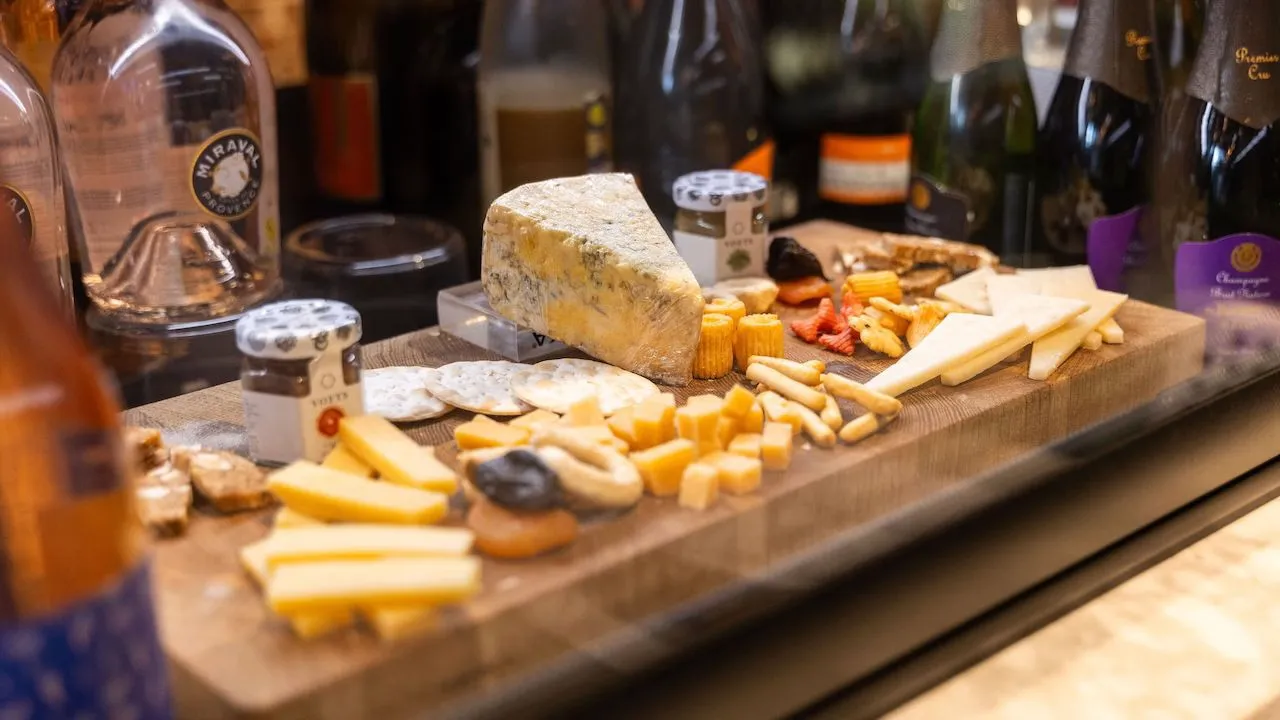
Ten Katemarkt in Oud-West sits right next to Foodhallen, a mixed market of groceries and produce with a handful of food stands worth the walk: a pastrami sandwich people rate highly, warm Brazilian cheese bread, and cheese and snacks to graze on. The trick here is simple, follow the queues. The longest lines mark the stands the locals rate. Easy to fold in before or after Foodhallen next door.
Westergas and pop-up festivals
Westergas is an old industrial site turned creative hub, home to pop-up food markets and seasonal festivals like Rollende Keukens (Rolling Kitchens). When they run, dozens of food trucks park across the grounds doing truffle fries, gourmet burgers, vegan tacos and street desserts. If you’re in town in late spring or summer, it’s worth timing.
The Jordaan and the old centre
The Jordaan and the old centre hide the single-item specialists: hole-in-the-wall fry shops, family herring stands, and the brown cafes where bitterballen meet beer. This is the territory our tours walk, because it’s where one great stall beats ten average ones.
Chinatown (Zeedijk) adds roast duck windows and steamed buns to the mix, minutes from the Red Light District. Our Red Light District food tour eats through exactly this corner of town after dark.
Best street food in central Amsterdam
Short on time or staying near the centre? You don’t have to go far for the good stuff.
- Frens Haringhandel is a standout herring stand on the Singel by the Bloemenmarkt, the floating flower market, not at Central Station. Regulars come back for the herring sandwich and the kibbeling. One of the best first bites of classic Dutch haring in the city.
- Manneken Pis near the Spui does fries with truffle mayo. Expect a line, and the line is worth it. Easy to fold into a walk through the centre.
- Damrak and Dam Square have grab-and-go kiosks for stroopwafels, poffertjes, warm sausages, frikandel and broodje kroket, most under 10 euros.
- De Wallen (Red Light District) is surprisingly packed with late-night walk-up windows: Turkish doner, Surinamese sandwiches, bitterballen, satay and fries, open long after the kitchens elsewhere have shut.
The colonial kitchen: Surinamese and Indonesian
Amsterdam’s street food would be half as interesting without its former colonies. A broodje pom (Surinamese chicken-and-taro sandwich) or a plate of Indonesian satay with peanut sauce is as Amsterdam as the canal ring.
The Surinamese sandwich shops around the centre and De Pijp are a sleeper hit with our guests: most travellers have never eaten Surinamese food before Amsterdam, and most leave planning to hunt it down at home. Spoiler: outside the Netherlands, you mostly can’t. Eat it here.
Street food by season
- Spring: maatjesharing season runs 1 May to 31 August, sold as Hollandse Nieuwe until 30 September. The freshest and fattest of the year, and a small national holiday when it opens.
- Summer: festival season, terraces everywhere, markets in full roar. Peak grazing.
- Autumn: comfort mode, hot kibbeling, satay, apple pie with the rain drumming outside.
- Winter: oliebollen season. These sugar-dusted fried dough balls appear in street stalls around November, fuel the whole country through New Year’s Eve, then vanish like Brigadoon.
How to do it right on your own
A few things locals know that save you from the mediocre stalls:
- Go hungry. You’ll want a bite of everything, and portions add up fast.
- Bring cash and a card. Some stalls are cash-only, others card-only.
- Hit the markets before lunch. Fresh food is best early and the lines are shorter.
- Dodge peak tourist hours. Early morning or after 3 p.m. is calmer.
- Ask for a taster. Plenty of vendors will hand you one, especially cheese and sweets.
- Follow the queues. The longest local lines beat the flashiest windows every time.
Amsterdam street food tour: do it in one afternoon
You could spend a week finding all of the above by trial and error, and the trial-and-error version includes some very mediocre stroopwafels. Or you can walk it in three hours with someone who eats here every day.
Our small-group food tour caps at 12 guests, small enough to fit inside the real stalls and shops, and covers herring, bitterballen, stroopwafels, fries, Surinamese food and more, with the history that connects them. Come hungry. Guests never quite believe how much food it is until about stop seven.
Travelling as a family, a group of friends, or a team? A private food tour runs the same route at your own pace, on your own date, built around what you want to eat.