The Netherlands is the best place on earth to eat Indonesian food outside Indonesia, and almost nobody tells visitors that.
Here is why. Indonesia was a Dutch colony for roughly 350 years. When it became independent, close to 300,000 people moved from the former Dutch East Indies to the Netherlands in the two decades after 1945, and they brought their kitchens. That is not a museum story. It is why every Dutch supermarket sells ketjap manis, why “Chinees-Indisch” takeaway is our version of the corner curry house, and why you can eat rendang three streets from the Anne Frank House.
We take guests past this history on our food tour and the colonial trade story behind it is one of the parts people remember. But you can also just go and eat.
Prices and ratings below were checked in September 2026. Restaurants change them; treat these as the shape of the bill, not a quote. Here is where.
First, What Is a Rijsttafel?
A rijsttafel, “rice table”, is ten to twenty small dishes arriving at once around a bowl of white rice. Beef rendang. Satay with peanut sauce. Sayur lodeh. A fried egg in sambal. Pickled cucumber. Fried tempeh. Krupuk you snap over the whole thing.
The part nobody mentions: the rijsttafel is a Dutch invention. Colonial officials in the East Indies took the Sumatran habit of putting many dishes on one table and turned it into a showpiece banquet, partly to impress guests with how much of the archipelago they controlled. Most Indonesians today have never eaten one. It survived here, in Amsterdam, because the people who cooked it came here.
So when you order a rijsttafel you are eating a genuinely Amsterdam thing. Slightly awkward history, extremely good dinner.
How to order one: it is priced per person, usually with a two-person minimum, and most kitchens want to know at booking. Do not order side dishes on top. There is already too much food. That is the point.
The Sit-Down Restaurants
Ordered by how consistent the recent reviews are, not by how famous the place is. Where you see mention counts below, they come from reading the 200 most recent Google reviews per restaurant and counting which dishes people actually name.
Restaurant MAX, Jordaan
Herenstraat 14H. Sit-down, book ahead. €40 to €65 a head for food, more with drinks. 4.6 on Google.
If you want one proper rijsttafel evening in Amsterdam, the numbers point here more clearly than anywhere else in the city. Of the 200 newest reviews, 35 name the rice table and 33 of those come with four or five stars. That is the cleanest signal in the whole dataset, and it holds across a lot of reviews, not a handful.
It is a small room on a quiet Jordaan street, five minutes from the Westerkerk. Reviewers mention their server by name, which almost never happens anywhere. Book, and book early in the week if you can.
Koeah, city centre
Spuistraat 106. Sit-down, but tiny. €10 to €20 a head. 4.7 on Google.
Full disclosure: Koeah are friends of ours and we bring guests to them on some tours, so read the number rather than me. 4.7 is the highest rating of any sit-down Indonesian place in the centre.
What makes them unusual is that they do soup. Almost nobody here does. Of the 200 newest reviews, 37 talk about the soto and 35 of those are positive, which is the strongest single-dish signal in this guide. Get the soto: turmeric, lemongrass, lime leaf, dried shrimp, done the East Java way, and add the ayam geprek if you like heat. It is a handful of tables and no reservations, so go at an odd hour.
Fair warning from the critical reviews: people expecting a restaurant sometimes call it a snackbar. It is a soup counter that happens to be excellent. Go knowing that and you will love it.
Warung Pas, Amsterdam Noord
Noordwal 1. Sit-down, outside terrace on the water. €25 to €35 a head.
This is the one I send people to in summer. Take the free ferry from behind Centraal, walk five minutes, and you are at a small warung with a wooden terrace on the IJ, watching the boats go past with a plate of rendang in front of you.
We ate here in July. The rendang was properly slow-cooked, dark and dry rather than swimming in sauce, which is how it should be. Order the nasi bakar, rice grilled inside a banana leaf so the leaf chars and perfumes it, and open the parcel at the table. Get the bakwan jagung, sweetcorn fritters, to share while you wait. There is a mushroom rendang for vegetarians that is not an afterthought.
Small place, big summer demand. Reservations only, and you go in through the bar downstairs.
Soenda Kelapa, canal belt
Utrechtsestraat 89. Sit-down. €30 to €40 a head. 4.3 on Google.
An old-school eethuis on the Utrechtsestraat where the rijsttafel comes out on little metal warmers down the middle of the table, exactly as it should. 31 of the 200 newest reviews mention the rice table and 25 of those are positive. The food praise is steady over years.
One honest note: there is a recent cluster of complaints about bookings not being honoured. The food is not the problem. Confirm your table by phone on the day and you should be fine.
Tujuh Maret, canal belt
Utrechtsestraat 73, four doors from Soenda Kelapa. Sit-down. €30 to €40 a head. 4.4 on Google.
The other rijsttafel on the same street, and the one reviewers reach for slightly more often: 39 rijsttafel mentions in the last 200 reviews. Positive share is a bit lower than MAX, with the grumbles landing on portion size against the price rather than on the cooking. Good bet if Soenda Kelapa is full, which on a Saturday it will be.
Long Pura, Jordaan
Rozengracht 46-48. Sit-down. €30 to €60 a head. 4.3 on Google.
The Jordaan’s big, dark, candlelit rijsttafel room, with more than 1,200 reviews behind that rating. 40 of the newest 200 name the rice table, 33 positively. It is the most “occasion dinner” of the Jordaan options: dim light, carved wood, long meal. Where MAX is a small kitchen doing one thing well, Long Pura is theatre. Both are good, they are just different evenings.
Aneka Rasa and Sie Joe, city centre
Aneka Rasa: Warmoesstraat 27, €20 to €30, 4.2. Sie Joe: Gravenstraat 24-A, €10 to €20, 4.2.
Two very different centre options. Aneka Rasa sits on the Warmoesstraat and does a mid-price rijsttafel, 28 mentions in the newest 200 reviews. It is the most convenient real rijsttafel to the Dam.
Eethuis Sie Joe is a lunch counter behind the Nieuwe Kerk, open since the 1980s, where the reviews are about nasi goreng, gado-gado and bami rather than any rice table. Cheap plates, wooden stools, in and out in half an hour. When people ask where to eat cheaply in the centre without eating badly, this is the answer.
Indo @ Home, Haarlemmerbuurt
Haarlemmerstraat 14H. Warung-style. €10 to €20 a head. 4.5 on Google.
Small, young, and the third-highest rated sit-down place in this guide. The reviews are led by rendang (11 mentions) and tempeh (7, all positive), which tells you the kitchen is confident with the slow-cooked stuff and takes vegetarians seriously. Good stop if you are walking the Haarlemmerstraat anyway.
The canal-belt institutions: Sampurna and Indrapura
Sampurna: Singel 498, €30 to €40, 4.3 across 2,684 reviews. Indrapura: Rembrandtplein 40, €20 to €60, 4.1 across 1,390 reviews.
These are the two big names most guidebooks send you to, and they are fine. Both do a proper rijsttafel, both have been at it for decades, both sit right on the tourist trail. The recent reviews are solid rather than exciting, and the complaints cluster on price against portion size. If you land at one because it was the only table in town on a Saturday, you will eat well. I would not cross the city for either.
Takeaway, and Where to Eat It
Teran Boelan, Jordaan
Tweede Lindendwarsstraat 3. Takeaway only. €10 to €20. 4.8 on Google.
The highest-rated Indonesian address in this guide, and it has no tables at all. A husband-and-wife counter in the Jordaan where recent reviewers keep using the words “best rijsttafel I have had”, about food handed to them in a box. Roughly half the menu is vegetarian.
Order the takeaway rijsttafel or the nasi rames, walk three minutes to the Noordermarkt, and eat it on the steps of the Noorderkerk. That beats most restaurant tables in this guide, and it costs a third as much. Check their opening hours before you go, and note they are closed Saturday and Sunday.
Tokos, if you want to cook it yourself
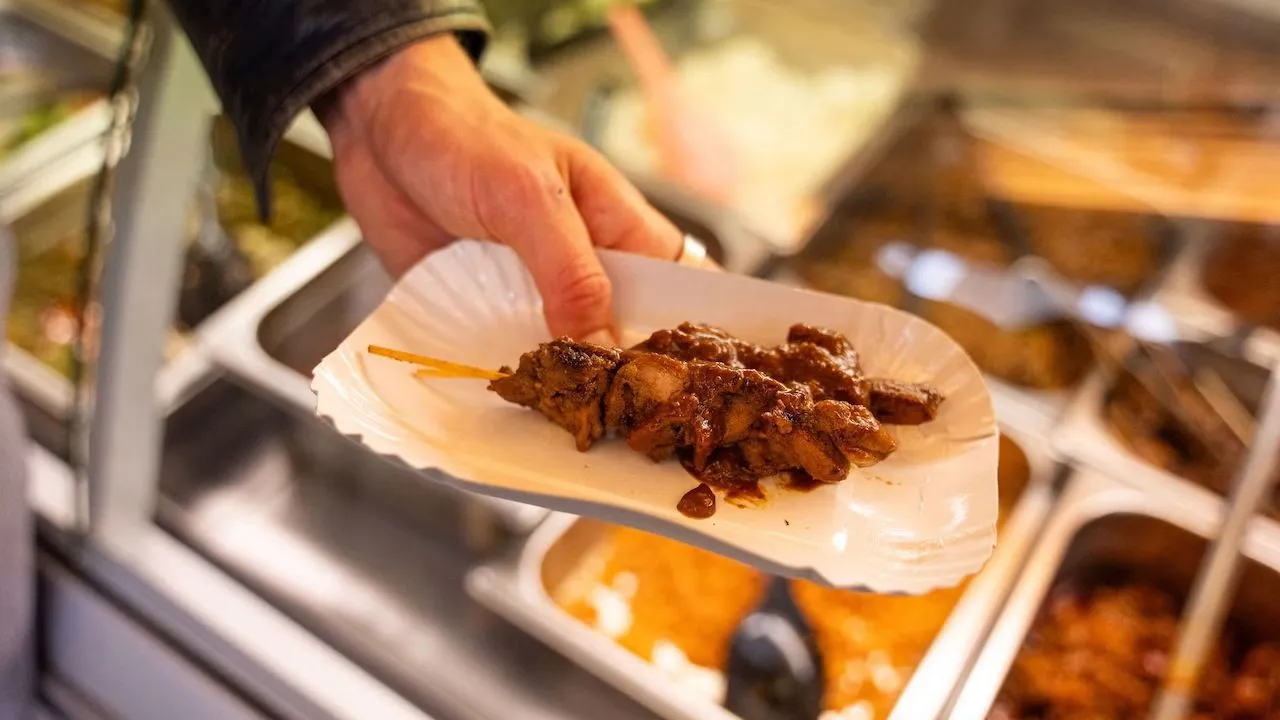
A toko is an Indonesian or Surinamese grocery, and most of them have a hot counter at the front with trays of the day’s cooking. You point, they fill a box, you pay less than you would anywhere with a menu. No English menu, no atmosphere, no problem.
The best of them are out in the Indische Buurt, De Pijp and Amsterdam Zuidoost rather than the centre. Take home a jar of sambal badjak and a bottle of ketjap manis while you are there. They are the two things that will let you cook something that tastes like this back home.
One warning about tokos generally: they change hands, and when they do the food can change overnight. Check recent reviews rather than an old blog post, including this one.
What to Order: A Short Glossary
- Rendang. Beef slow-cooked in coconut and spice until it is almost dry. The single best test of a kitchen. If the rendang is wet and stewy, order something else next time.
- Satay (saté). Skewers, usually chicken or pork, with peanut sauce. Dutch people eat this weekly and have opinions.
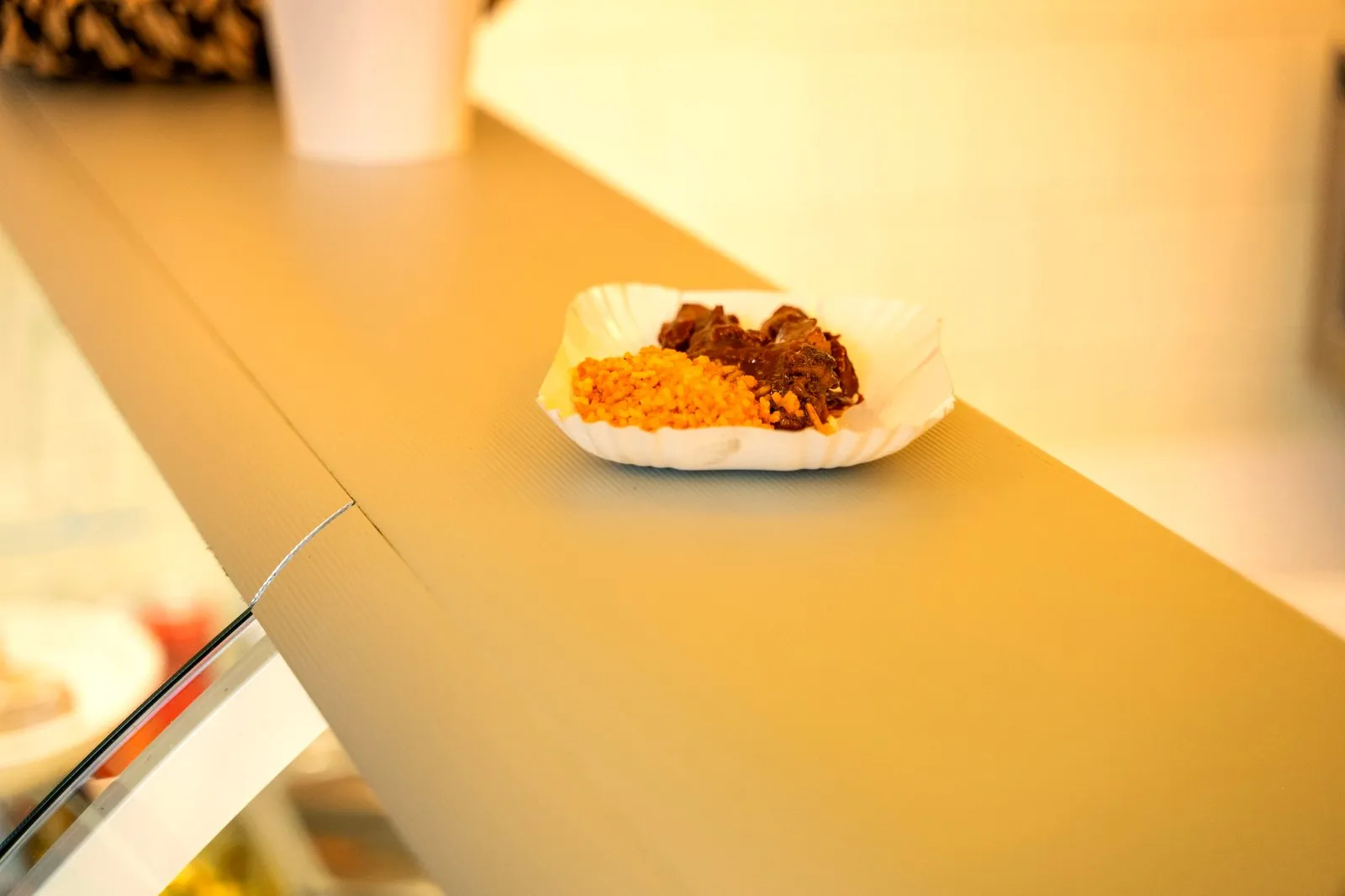
- Nasi rames. One plate, rice in the middle, a few dishes around it. The rijsttafel for one person in a hurry.
- Nasi goreng and bami goreng. Fried rice, fried noodles. Comfort food, sold everywhere, hard to get wrong.
- Soto. Clear, fragrant chicken or beef soup with lime and fried shallots. Rare in Amsterdam. Chase it when you see it.
- Gado-gado. Vegetables, egg and tofu under warm peanut sauce. The one everyone orders on a second visit.
- Nasi bakar. Rice grilled in a banana leaf. Order it for the moment you open it.
- Sambal. Chilli paste. Comes on the side. Taste your food first, then decide.
- Krupuk. Big prawn crackers. Snap them over your rice, do not eat them like crisps.
A Few Practical Things
Book for rijsttafel, not for soup. MAX, Long Pura, Tujuh Maret and Soenda Kelapa all want a reservation. Koeah, Sie Joe and the tokos do not take them.
Two people minimum. Nearly every rijsttafel is priced per person and needs at least two. Eating alone, order nasi rames instead.
Vegetarians eat well here. Tempeh, tahu, gado-gado, sayur and vegetable rendang are core dishes, not swaps. Teran Boelan and Indo @ Home are the strongest of this list. Ask whether the sambal has shrimp paste, because it usually does.
Come hungry. A rijsttafel is more food than it looks like on the menu.
Eat It With Us
You can walk this whole list yourself, and you should. What you will not get is the why: why there is an Indonesian restaurant on every other Amsterdam street, what the VOC did to get the spices there in the first place, and why a Dutch grandmother’s kitchen cupboard has ketjap in it.
That story is a chunk of our 10 Tastes of Amsterdam food tour, from Amsterdam locals running tours since 2015 and widely copied since, with never more than 12 guests. We eat Indonesian and Surinamese on the way, along with the herring, the cheese and the stroopwafels.
Not in town yet? Join the friends list and we will send you our food survival guide, which has the rest of the addresses we did not fit here. Selamat makan.