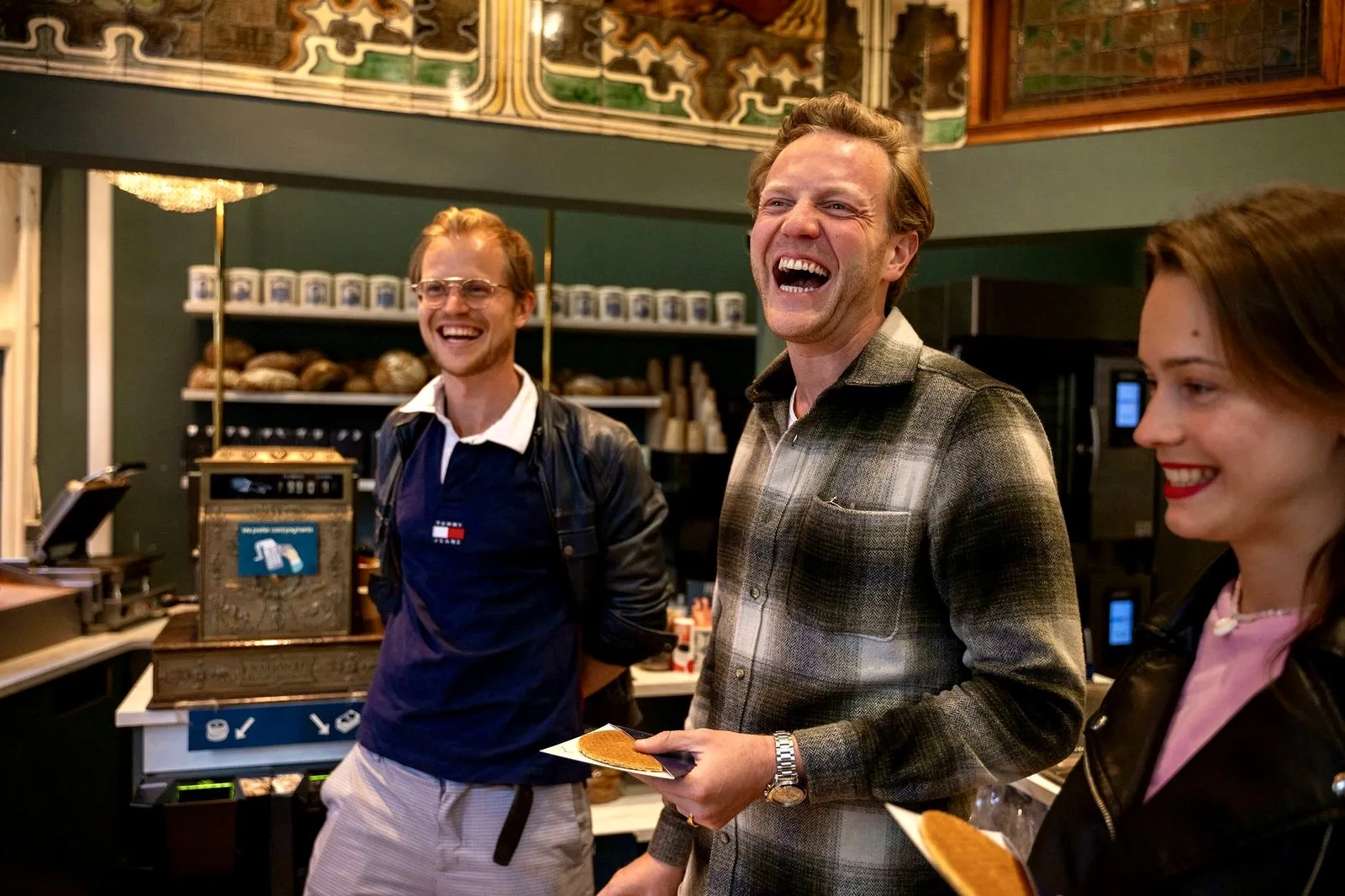
December in Amsterdam has three food seasons stacked on top of each other. First Sinterklaas, then Christmas, then New Year’s Eve. Each one has its own snacks, and most of them are only around for a few weeks a year.
Here is what we eat, when, and what is actually true about it. We are Amsterdam locals who have run tours since 2015, so we have heard every story about these foods. Not all of them hold up.
Early December: Sinterklaas
Forget Santa for a moment. The big December evening for Dutch families is pakjesavond, “parcels evening”, on 5 December. This year that is a Saturday.
Sinterklaas arrives weeks earlier, by steamboat from Spain. This year the national arrival is on Saturday 14 November, in the town of Grave. Amsterdam gets its own the next day, Sunday 15 November: the steamboat sails up the Amstel to the Scheepvaartmuseum, and Sinterklaas then rides his horse from Waterlooplein through the centre to Leidseplein.
From then on, kids put one shoe by the fireplace or the radiator at night, often with a carrot for his horse, and hope to find a small present or a sweet in it the next morning.
Two details most visitors never hear:
- The steamboat and his helper both come from a picture book, Jan Schenkman’s from 1850. Much younger than people think.
- The horse was Amerigo from 1990. In 2019 he retired in the story and Ozosnel took over.
The grown-ups play too. Poems and wrapped-up surprises are a very Dutch part of the evening, adults to adults, and much weaker across the border in Flanders.
The drink of the evening is bisschopswijn, “bishop’s wine”, a warm spiced red wine. The name comes from the red of a bishop’s robes, and the link to Sinterklaas came later.
The Sinterklaas shelf: what you are actually eating
Chocolate letters. Everyone gets one, usually their own initial. Before chocolate, the letters were made of bread dough. Chocolate ones were already around by the mid-1800s.
Banketletter and banketstaaf. Flaky pastry wrapped around almond paste, shaped as a letter or a bar, sold at Sinterklaas and again at Christmas. Cheaper ones use a filling made from beans instead of almonds, so check the label.
Kruidnoten, not pepernoten. The small crunchy spiced rounds everyone buys and throws around are kruidnoten. Real pepernoten are a different cookie: rye, honey and anise, chewy, close to taaitaai. Almost everyone calls the crunchy ones pepernoten anyway. That mix-up only dates from the 1970s.
Speculaas. There is no official spice list. The Bakkerijmuseum’s reference recipe uses six: cinnamon, clove, nutmeg, white pepper, anise and coriander. Bakers kept their own mix secret, because the mix was the business. Real speculaas is crisp. Only gevulde speculaas, filled with almond paste, is soft.
Taaitaai. The name just means “tough-tough”, and it is first written down in 1787. You may read that it is named after a town in the Philippines. It is not. Taaitaai was already sold at Amsterdam’s Sinterklaas market from at least 1480.
The courtship cookie. A speculaas doll used to be a courting gift. Whether it meant yes or no changed from region to region, so nobody can tell you the one true meaning.
Practical: the shelf fills up in November, and after 5 December it is gone.
Christmas: dinner you cook at the table
Ask a Dutch family about Christmas dinner and many will say gourmetten. A small electric grill sits in the middle of the table, everyone gets a tiny pan, and the family spends hours cooking their own little pieces of meat.
It looks ancient. It is not. The grill came from Switzerland, and the Dutch habit started with a 1977 campaign by the meat information bureau, “Gourmet, probeer ‘t eens!”, meant to sell more meat and beat cheese fondue. It worked. Roughly one Dutch household in three now gourmets at Christmas.
On the table over the Christmas days: kerststol, a Christmas bread with raisins and a core of almond paste, dusted with powdered sugar. Some families hang kerstkransjes, small wreath-shaped cookies, in the Christmas tree.
The Dutch also get two Christmas days. 26 December, Tweede Kerstdag or Second Christmas Day, is a public holiday too, and many people spend it visiting family or friends.
For the deep cut: duivekater, a long bread shaped like a bone with knobbly ends. It was a Christmas and New Year bread, and an Amsterdam rule already regulated its sale in 1542. You can see one standing in Jan Steen’s painting of the baker Arent Oostwaard (1658) at the Rijksmuseum.
Out in the city: markets, ice and light
Amsterdam has several seasonal Christmas markets. The biggest is the Christmas Village on Museumplein, which runs through most of December. Check the dates each year, because the markets change from season to season. At the stalls you will find mulled wine sold as glühwein.
In winter a temporary ice rink opens on Museumplein too. East of the centre, Jaap Eden has an outdoor 400-metre track, open from October to March. At the rinks and the markets, the warm-up is hot chocolate with whipped cream.
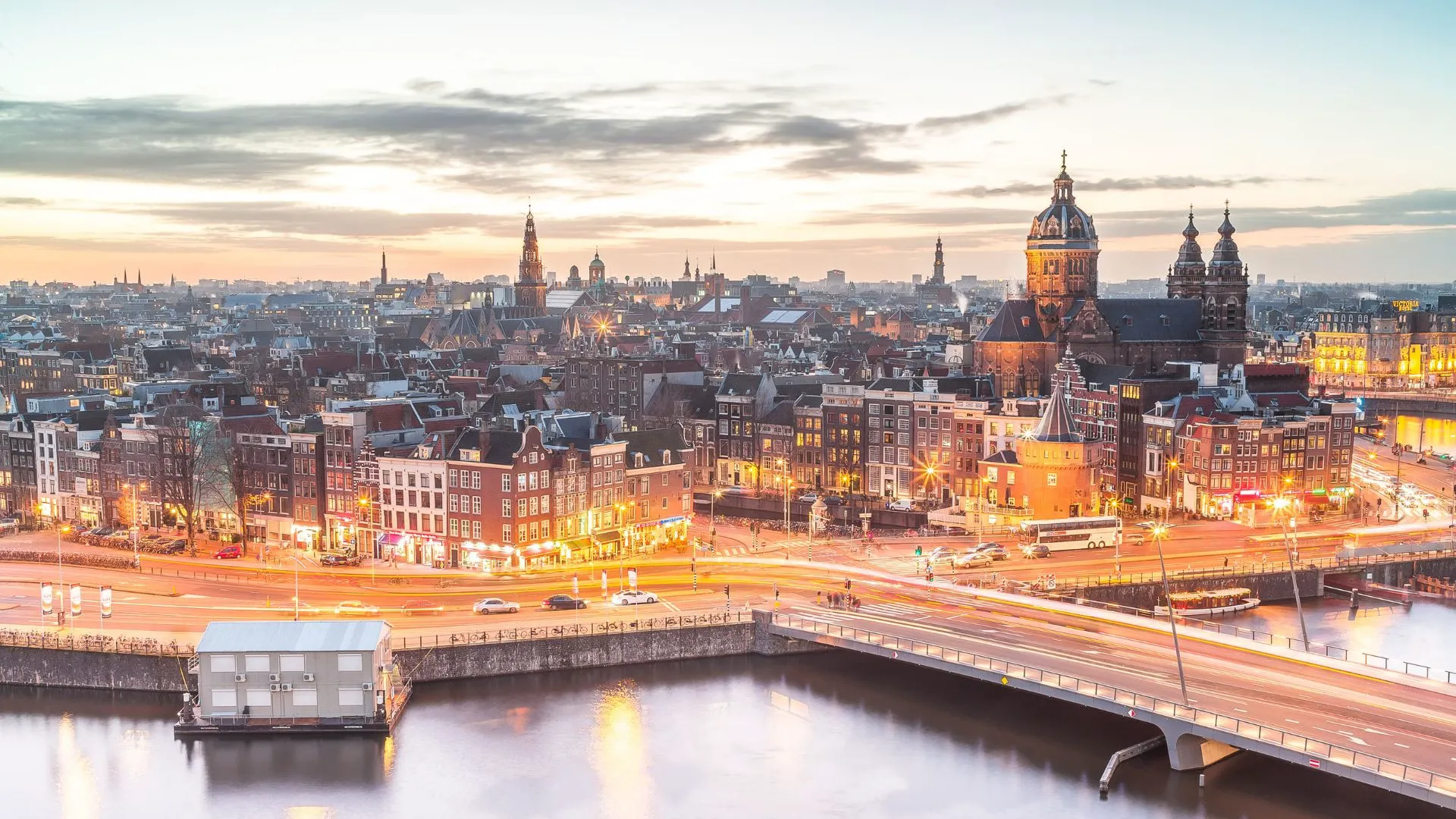
After dark, the 15th Amsterdam Light Festival runs from 26 November 2026 to 17 January 2027, with light art along the canals that you can see from a boat or on a walking route.
In December the sun sets around 16:30, so our 16:00, 17:00 and 18:00 departures walk the canals in the dark. The evening food tour is the same 10 Tastes at those times, and most guests do not need a meal afterwards. We do not follow the festival route.
New Year’s Eve: oliebollen
Somewhere in October a wooden stall appears on an empty square, and a queue forms. That is oliebollen season. The stalls stay until early January, and the big night to eat them is 31 December.
An oliebol is a ball of yeast dough, fried, usually with raisins or currants, under a pile of icing sugar.
How old is it? Older than the word. Fried “oliekoeck” shows up in print in 1528, and something that looks very much like today’s oliebol sits in an Aelbert Cuyp painting from around 1652. The word “oliebol” only arrived in the nineteenth century. Some historians argue the recipe came north with Sephardic Jews after 1492. Others disagree, and the argument is still open.
The Dutch take it seriously enough to rank their stalls nationally. The newspaper AD ran a famous oliebollen test from 1993 until its 2017 edition. Today the best-known ranking comes from the website Oliebollentestonline.nl.
Next to the oliebol you will see the appelbeignet, apple rings fried in batter. In the north and east people call the same thing an appelflap. Same snack, two names, depending on where your grandmother grew up.
At midnight people raise a glass of bubbles and wish each other “Gelukkig nieuwjaar!”. Many first watch the Oudejaarsconference, a comedian’s TV look back at the year, on air on 31 December since 1969.
One big change this year: from New Year’s Eve 2026 the Netherlands bans consumer fireworks nationwide, apart from small ones such as sparklers. The fireworks you see now come from licensed professional shows.
1 January: the cold dip, then soup
On New Year’s Day thousands of Dutch people run into freezing water. The nieuwjaarsduik started at Zandvoort in 1960 with seven people. In 2024 more than 65,000 people did it, at 162 locations. Amsterdam has its own dive spots, so you do not need to leave town.
The orange hats come from the sponsor, Unox, since 1999. So does what waits on the beach: snert and oliebollen.
All month: snert
Snert is Dutch pea soup, cooked down until it is closer to porridge than soup, with smoked sausage and fatty pork through it. The test is famous: a spoon should stand up in it. Dutch newspapers were already explaining that rule in 1952 and 1969.
Two things locals will tell you:
- It is not proper snert until it has stood for a night.
- It comes with dark rye bread, with cured pork belly on the bread, not in the soup.
Making snert was added to the Dutch list of intangible heritage in 2018.
Eat December with a local
Our 10 Tastes of Amsterdam tour runs through December: 3 hours on foot from the Spui through the canal ring, the Nine Streets and the Jordaan, 10+ tastings, small groups of max 12. The last stop is a sweet finish, and in winter that can be a seasonal dessert.
A December guest put it simply: “Amsterdam looked lovely with the Christmas lights.”
Planning a December outing for your team or your family? We plan a custom private tour around your group, on foot, by bike or by boat, and the private food tour is just your group and your guide.
Organising the office Christmas party? The company Christmas party as a food tour works as the whole evening or as the first half before your own dinner or drinks, and a whole company walks in small groups, each with its own guide: see large group tours.
Looking for a present? A gift voucher works on every tour we run, fits in a Sinterklaas shoe or under the tree, and they book a date whenever it suits them.
Amsterdam’s #1-rated food tour, Tripadvisor Travellers’ Choice Best of the Best 2026, awarded to the top 1% of experiences worldwide. 5,000+ five-star reviews.